My Student Lifestyle: courses, classes, exams and the Greek university
The winter semester lasts from the beginning of October until the end of January. And the spring semester starts on the mid-february until the beginning of July.
Organization and class structure
One of the most striking aspects of university in Greece is the length of classes. In France, some classes may last up to 2 hours, whereas in Greece, they are consistently 3 hours long. With this system, each class takes place only once a week. In contrast, in France, the same course is usually split into 2 sessions per week on different days. Another difference with France is the exams. Indeed, almost all the courses have only a final exam to stand for at the end of the semester. However, some professors also like to add a midterm exam to train students or reward those who regularly attend the class. By "reward", I mean that (most of the time) the score of your midterm can count for 40%, so that you have 60% left to pass to validate the course.
Honestly, I recommend that you stand for the midterm exam if there is one. For instance, in one of my courses, I had to write an essay, but I was not really comfortable with writing one. Then, I did the midterm exam to train, and I noticed that my way of writing did not correspond with my professor's expectations. She gave me explanations and advice to make up the final exam, which I validated at the end.
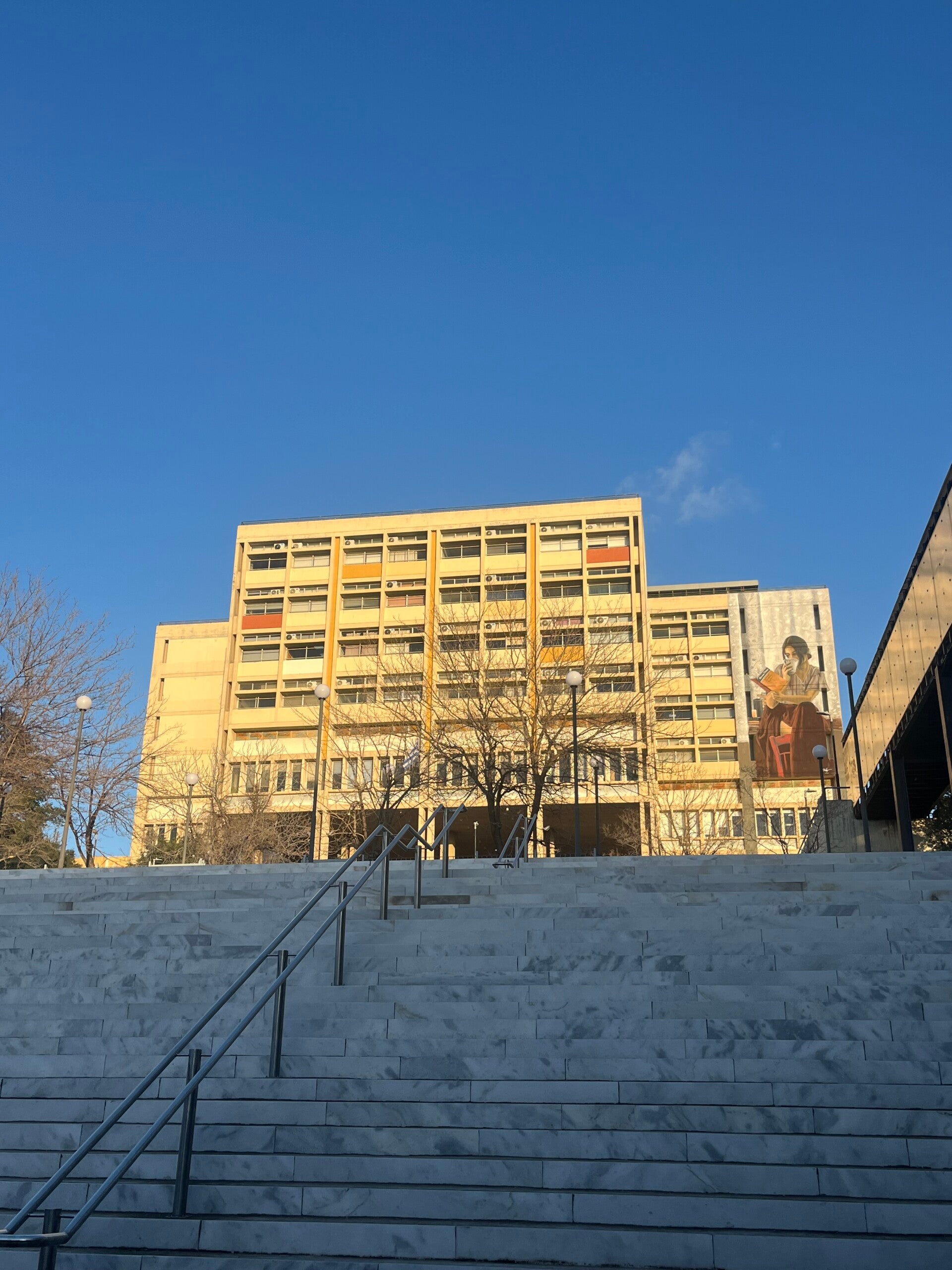
About the campus: My Host University was the NKUA in the Philosophy school. There are actually two campuses in that school; one campus for the studies of Law is near the center of Athens - Akademias; the other one, the one I go to for my classes, is in Zografou, on the East of Athens. From where I lived, by bus, it was almost half an hour to go.

My courses -
Winter semester
For both semesters, I had 5 different classes.
Teaching English to Young Learners
This course aims to provide a comprehensive understanding of the principles and practices involved in teaching English to children aged 5-14. It focuses on developing the knowledge and skills necessary to create effective, engaging, and age-appropriate English lessons. This is an interesting class because it is both about theories and practice. In 3 hours, one part is theories of learning in children and young learners, and the other part is the creation of an activity using the analysis we discussed.
Applied Linguistics to Language Teaching and Learning
This class is a compulsory course and an essential component of the Faculty's Pedagogic and Teaching Competence Program (PPDE). The course aims to develop knowledge and skills essential for teaching and learning languages. It presents key theories of language and language learning, examining how these have shaped various teaching approaches and methods. What differs from the other course is that the public can be as children as adults, that we talk about the difference between a curriculum and a syllabus, and that it is more about pedagogy.
Introduction to the Study of Language Variation
This course provides an introduction to the study of the geographical varieties of a language, with an emphasis on the description of varieties of English spoken in the world today. The course examines dialectal variation at different levels of linguistic analysis and focuses on dialectal diversity. It focuses on dialects and variations in geography and social changes. We talk about how the words, grammar, and vocabulary differ from one part of the world to another. That course is the perfect mix of phonetic and linguistic.
Theory of Culture
This class encourages us as students to think critically about how contemporary philosophical and theoretical debates question the idea of Western culture as the ultimate or superior model of all cultures. That course is the most philosophical one. The content is really captivating because we analyze the evolution of cultural concepts through centuries: Slavery, Race, Racism, capitalism…
Greek Class
Greek classes are 6 hours a week, split up into two sessions of 3 hours. We had to do a little test to create groups of levels. As you can guess, I am a beginner…Then, the class aims to have an A2 level at the end of the semester. It was really funny every lesson. Indeed, we were Italians, French, Germans, Scottish people…and we all struggled with the language.
However, you need to know that you have to pay to be part of the course. The 1st semester is 150 euros and the second one is 200 euros. I think it is worse to pay if you are into learning new languages.
If you want more infromation about any help and scholarships, you can follow the section below.
Spring semester
Genres In English
This course helped me explore different genres of media discourse, especially newspapers and magazines. I learned to better understand their structure and language. We also examined important concepts such as lexical and grammatical cohesion, as well as the social and ideological dimensions of texts. Also, the course looks at how identities are constructed through discourse, along with linguistic concepts.
William Shakespeare
In the William Shakespeare course, I study 3 Shakespeare’s plays from different genres, such as comedy, tragedy, history, and romance. The aim was to understand the historical, social, and theatrical context in which they were written and performed. I learned about Shakespeare’s sources and early modern staging techniques, and explored the social, political, philosophical, and religious issues raised in the plays.
Borders in World Anglophone Literature, Cinema, and Art
This class helped me explore the idea of borders in different ways—not just as physical structures or geopolitical boundaries, but also as symbols of division and as spaces where identity can be shaped and redefined. It made me think about how borders influence people’s lives and can even lead to new ways of understanding political structures. We looked at contemporary English-language literature and films that represent real borders, such as those in Cyprus, Israel-Palestine, the UK-Ireland, and the US-Mexico.
Women's stories in the Long Eighteenth Century
For this course, we studied stories written by and about women from the long eighteenth century (1688–1815). We looked at questions of authority and authorship, and explored how gender, race, and class shaped these texts. We studied a variety of genres, including prose fiction, letters, journals, essays, and travel writing, to understand how women’s fictional and life writing interacted and reflected their experiences in that period.
Greek class
I chose to continue Greek classes for my second semester because I wanted to improve my language. Even though I paid 200 euros to join the class, I still thought it was worth doing. I left Greece with an A2/B1 level. I was able to order food in Greek! (And more things of course.)


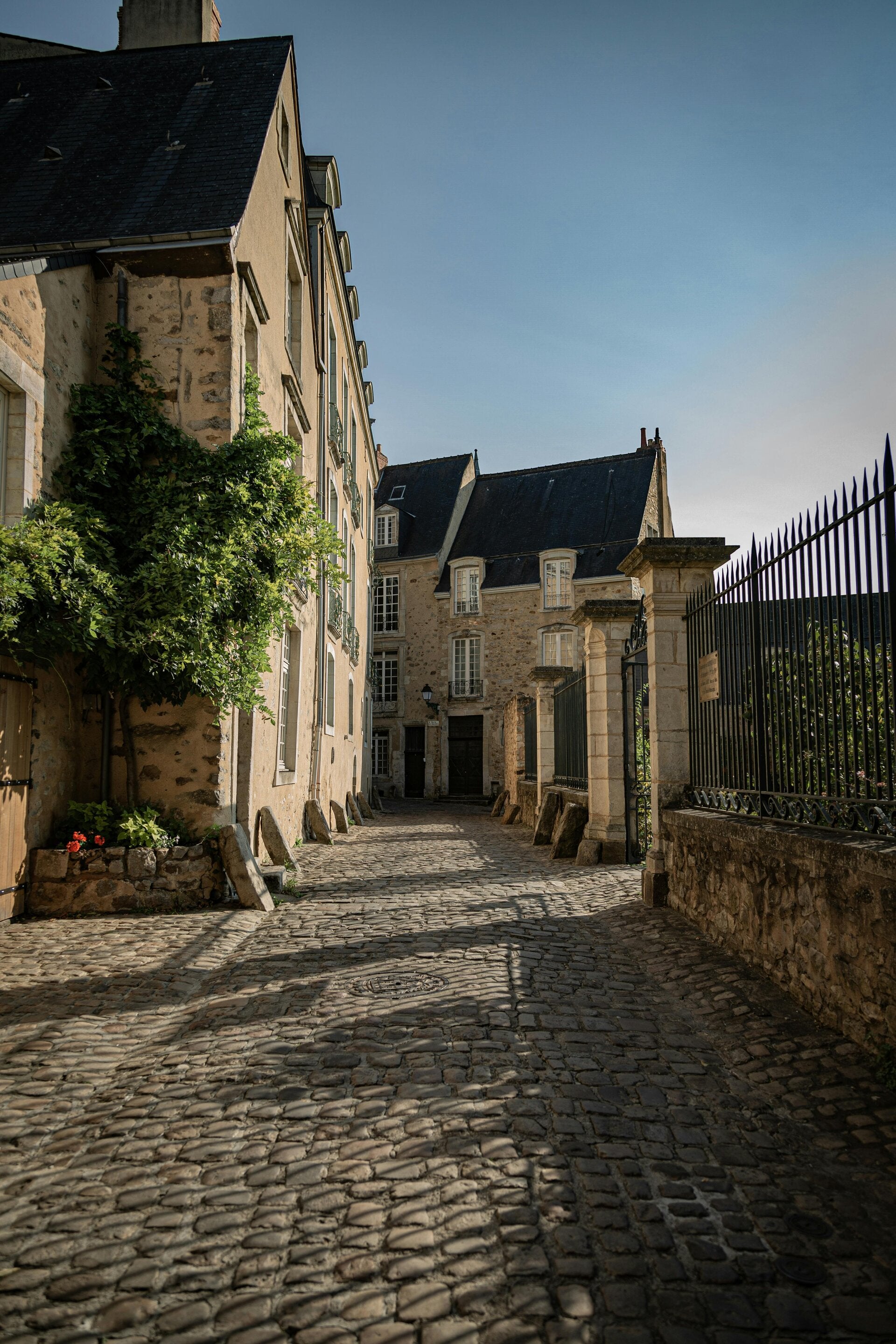
Le Mans University in the NKUA
Athens and Greece in general host a lot of Erasmus students each semester. You can think that the more students, the easier it is to promote your university. The reality is that we talk with people from all over the world every week, and that makes us forget which university we come from. However, I tried my best to talk about the city, the campus, and the degree to the people I met.
Créez votre propre site internet avec Webador